AI ✖️ Language Education & Learning

Practical AI for language teachers

Haiyan Bai, Ph.D.

白海燕 / 백해연

I was born in China as a member of the Korean ethnic minority. I began studying Japanese in junior high school, majored in Japanese at university, and then went on to graduate school in Japan to study linguistics. A few years ago I joined a Korean Sign Language corpus project at a university in Korea as a researcher, which also opened the world of sign language to me.

I love thinking about and learning languages, and I live surrounded by many of them every day. I now teach Chinese, Korean and Japanese at university. I write papers that dig into the “why” behind language, and every day I look for ways to help people acquire languages faster, making both teaching and learning more efficient.

Languages

Bilingual in Korean and Chinese; also Japanese and English

Teaching

Teaches Korean, Chinese and Japanese at university

AI in Practice

Applies AI to course design, materials creation and learner support. JDLA Deep Learning for General (G-Kentei) certified.

View research profile →

Let AI make teaching time
more valuable.

Language teaching involves a lot of repetitive work. With AI, that work becomes faster, and the time saved can go into better lessons and conversations with students. On this site I share, in concrete terms, the AI methods and tools I use myself.

⚡

Less repetitive work

Let AI handle repetitive tasks such as writing exercises, assisting with grading and organizing vocabulary lists, turning time spent on busywork into time for thinking.

✦

Faster materials

Use AI to create slides, handouts and audio materials, cutting preparation time dramatically so you can focus on the quality of your lessons.

Textbooks made with AI.

Based on classroom practice, these textbooks were planned, written and given audio with the help of AI. Most come with audio and a practice app, so you can start learning right away on your smartphone. The books are in Japanese; click a cover to open its Amazon page.
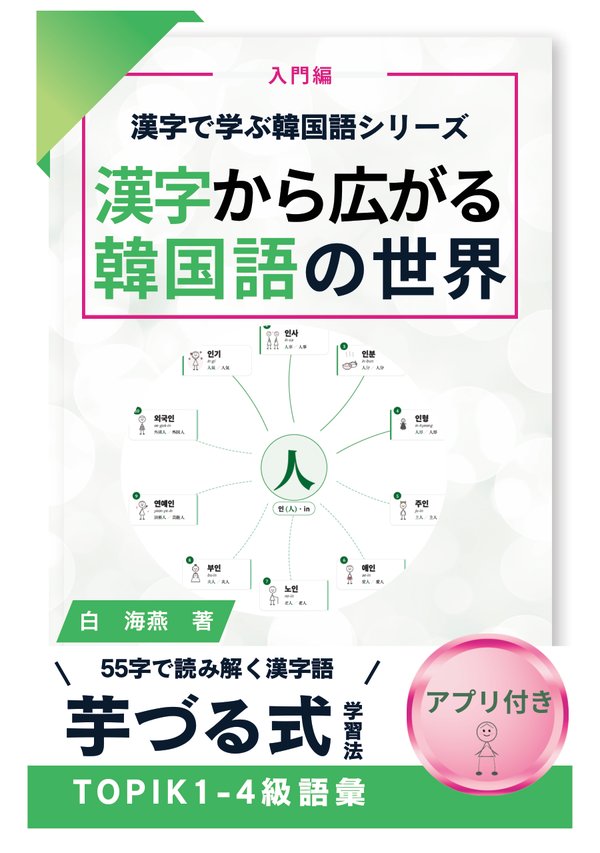
Cover of “漢字から広がる韓国語の世界 入門編” Amazon ›

Korean × Kanji

漢字から広がる韓国語の世界 入門編

Korean Through Kanji: Introductory — Sino-Korean words chained from 55 characters

Starting from 55 basic characters such as 人 (인), learn Sino-Korean vocabulary in connected chains. Covers TOPIK levels 1–4, with a practice app.
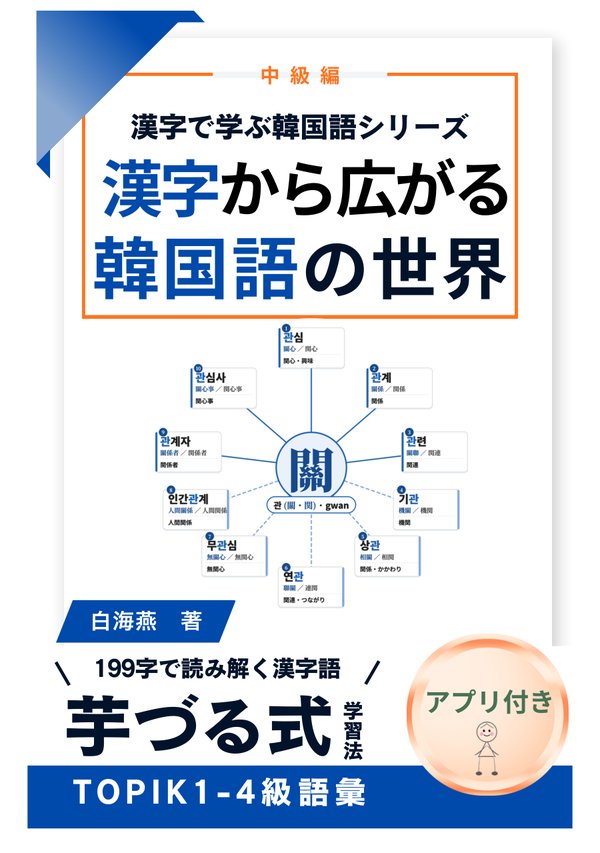
Cover of “漢字から広がる韓国語の世界 中級編” Amazon ›

Korean × Kanji

漢字から広がる韓国語の世界 中級編

Korean Through Kanji: Intermediate — reading Sino-Korean words with 199 characters

Using the readings of 199 characters as clues, systematically expand your intermediate Sino-Korean vocabulary. TOPIK levels 1–4, with a practice app.
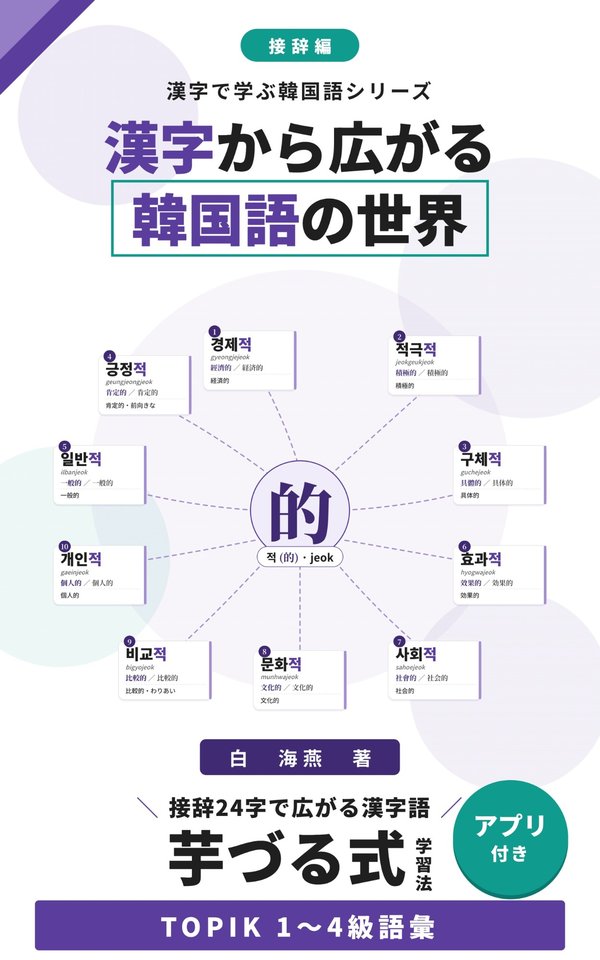
Cover of “漢字から広がる韓国語の世界 接辞編” Amazon ›

Korean × Kanji

漢字から広がる韓国語の世界 接辞編

Korean Through Kanji: Affixes — Sino-Korean words built from 24 affixes

With 24 affixes such as 的 and 性, multiply your Sino-Korean vocabulary many times over. TOPIK levels 1–4, with a practice app.

Cover of “3ヶ月でレベルアップ 韓国語 料理編” Amazon ›

Korean

3ヶ月でレベルアップ 韓国語 料理編

Level Up in 3 Months: Korean, Cooking Edition — 60 audio tracks and a review app

Kimchi fried rice, bibimbap, tteokguk… 12 lessons that teach conversation and grammar through 12 seasonal Korean dishes. Upper-beginner level.

Cover of “3ヶ月でレベルアップ 中国語 料理編” Amazon ›

Chinese

3ヶ月でレベルアップ 中国語 料理編

Level Up in 3 Months: Chinese, Cooking Edition — HSK levels 3–4

Dumplings, mapo tofu, Peking duck, hot pot… 12 lessons built around 12 dishes from across China. 93 audio tracks and a practice app with 282 vocabulary cards.
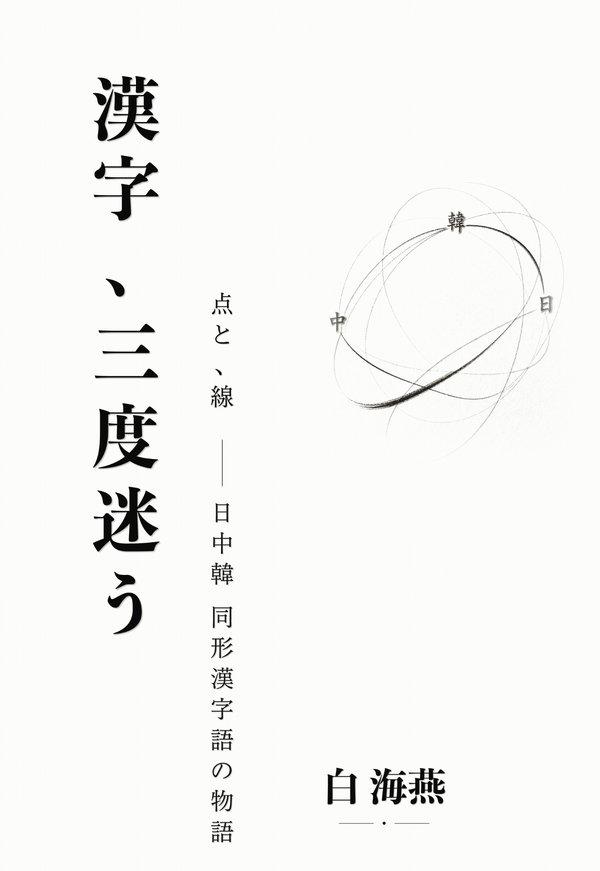
Cover of “漢字、三度迷う” Amazon ›

Japanese・Chinese・Korean

漢字、三度迷う

Kanji, Lost Three Times — dots and lines: stories of kanji words shared by Japanese, Chinese and Korean

How does the same kanji word change its meaning across Chinese, Japanese and Korean? Starting with 老婆, stories of words that travel between the three languages.

See all books on Amazon →

Learning apps built with AI.

Web apps I developed together with AI for my classes and my own study. No installation needed: they run right in your smartphone browser, and you can add them to your home screen to launch them like an app. The interface is mainly in Japanese.

Pronunciation

Textbook companions

🔒 For registered users only (full name and affiliation). You will be asked to sign in when you open an app.

English

Get in touch.

For questions about the materials, requests for talks or workshops, or advice on using AI, please use this form. I will reply after reviewing your message. Japanese, Korean, Chinese and English are all welcome.

The information you enter is used only to reply to your inquiry.